
2-4 night Sitka itinerary
Depart Sitka Day 1
Guests will board at noon at a predetermined slip number or will be tendered to the vessel in Sitka harbor from the guest loading/unloading dock. A light lunch will be provided once vessel is underway towards Goddard Hot Springs. This route finds exposure to the Gulf of Alaska and re-enters to inland waters to find anchorage. Lingering humpback whales, sea lions and multiple birds to look for along the way. Once anchored near Goddard Hot Springs, guest will enjoy a late afternoon or after dinner soak at the Hot Springs. With west facing views, under the midnight sun, brings spectacular colors for sundown while enjoying the firepit on the upper deck.
Day 2
After a scrumptious breakfast, vessel will head for North Sound. This protected area is perfect for water sports like kayaking, whale watching and fishing. Sea Otters are commonly seen floating around the kelp beds and rocky shoreline and watch for Brown Bear, Bald Eagles, Dapper Harlequin Ducks and Sitka Black-tailed deer on shore. The humpback whales often feed in this area too. With multiple protected anchorages, lots of exploring to do. Good cell service here as well. Take a soak in our intimate 4 person hot tub on deck. Next day, vessel deboards by 11am back at Sitka Harbor.
3-4 night packages will extend to Salisbury Sound. We will wind our way through a myriad of islands into Olga and Neva Straits and anchor for the evening in protected coves on the northern shore of Kruzof Island like Sukoi Inlet and Kalinin Bay. Hiking Sea Lion Cove Trail is a moderately difficult trail that traverses a variety of Alaska’s diverse ecosystems of grassy meadow, beautiful old growth forest, lake and muskeg, before emerging onto a two-mile long sandy beach at the edge of the Gulf of Alaska. The meadow attracts Brown Bears and Bald Eagles and is a great place to spend time beach combing, bird watching and taking photos. Fishing is excellent in this area as well if you want to drop a line.
2-4 night Sitka itinerary
Peril Strait & Sergis Narrows
We depart Sitka Harbor at noon at a predetermined pick up point and head towards the swirly waters of Sergius Narrows. Finding overnight anchorage near or past the narrows is the goal as tide dictates when the vessel can pass. A rather thrilling passage with even a small amount of current. An evening social roundtable under the midnight sun around the upper deck firepit, is in order to get acquainted with the boat and meet your crew! Enjoy your first night relaxing and dialing in to your stateroom and the creatures of comfort available on board.
Day 2 We continue through placid Hoonah sound where humpback whales are plentiful and may find a pod of killer whales too! There are a few good halibut fishing banks we can try out for a while if you want to drop a line. We find anchorage at Eva Lake or Appleton Cove. Excellent fishing and Dungeness crabbing in this area. Join the crew in dropping crab pots, go jigging and to explore the shoreline. These are very protected areas to explore by kayak and watch for critters. You will likely find Sitka blacktail deer grazing above the tidelands and brown bears too. If we want to light a fire on the beach, this place is ideal and tranquil.
Day 3 We head southbound on Chatham Straight and head for the Baronof Warm Springs. After a short ride on the tender to the public dock, lots of boardwalk to explore in this mini community. A 20 minute hike to the natural hot springs is a rather rewarding payoff and experience to feel the rush of a raging waterfall that roars right next to the hot spring. For those who choose a gentler path, you can enjoy the tubs next to the public docks for a relaxing private experience. There is also an excellent opportunity for fly fishing, the upper lake boasts some nice sized cut throat.
Overnight anchorage will be either Red Bluff or Takatz Bay depending on the conditions in Chatham Straight. The most remote area is reached here so brown bear viewing, fishing, shrimping, and crabbing in these areas are best. Once anchored, guests can help the crew drop crab pots, go kayaking, drop in a line for Halibut or just relax around the firepit.
Day 4 Today’s destination leads us to Tenakee Springs, another shore experience in a remote village of about 100 people, on the east side of Chichagof Island. The town features a bathhouse of 106 degree sulphur hot mineral spring for same sex public bathing only during a set schedule. Several large historic structures including Snyder Mercantile, community center, firehall, newly renovated seaplane dock and upgraded boat harbor are all to check out. A wonderful anchorage and the Dungeness Crab fishing is excellent.
Day 5 You can help the crew pull up Dungeness Crab pots or watch the skiff return with the overnight catch. This is the day where the vessel will aim to get closer to Serguis Narrows to get in to position for crossing the next day’s slack tide to cross it. Watch for whale spouts as we cruise up Peril Strait and towards Hoonah Sound. The protected waters comprise the summer feeding grounds of more than 100 Humpback Whales and also support Orca (Killer) Whales, Dalls Porpoise, Stellar sea lion and a variety of sea birds. Chances of encountering Humpback and Orca Whales are high in this area and whale watching is likely to take up a large part of our day. At anchorage, we will snuggle up to our firepit on the upper deck to enjoy a cocktail under the midnight sun.
Day 6 Enjoy a cup of coffee and a leisurely stroll on deck after breakfast, while we cross the narrows to return to North Sound. More whale watching, sea otters, fishing, and kayaking. Dungeness crab and spotted prawn feasts are a sure thing with all that is caught by now! Any fish that guests have acquired should be getting packed up and vacuum sealed and ready to go out in a fish box for your flight or overnight shipments. The finale dinner will comprise of our chef’s creations of our catch on charter. From the ocean to the table, this is our grand finale supper for all to enjoy. A slideshow of your charter experience will make lasting memories, reflecting on your Alaskan adventure.
Day 7 An early start with a family style breakfast underway to arrive at Sitka harbor for guest drop off on the dock. 10 am ETA to give ample time to catch shuttles to airport or alternate accommodations made by the guests. Hugs and farewell to our new friends!
A typical 7 night route from Sitka to Sitka is on this link:
2-4 night Sitka itinerary
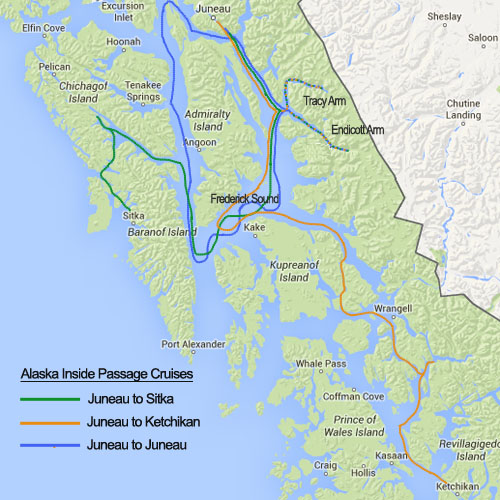
To cover the most area and do the most you will want to do this package so you see nothing twice!
Trip can be Sitka – Juneau or Juneau – Sitka
•Day 1
•Depart for Tracy Arm-Fjords Terror Wilderness Voyage into Tracy or Endicott Arm, both spectacular fjords with waterfalls cascading from glacially carved walls. See the soaring Dawes or South Sawyer Glacier up close and take a cruise in a Zodiac for an unbeatable view among sculpted icebergs. Keep an eye out for harbor seals, harbor porpoises, and arctic terns. A fabulous kayak spot
•Day 2
•Frederick Sound and Admiralty Island
•These waters are prime areas for both orca and humpback whales. With luck, guests may observe their fascinating behavior—breaching, tail-slapping and variations on feeding—as we fill the deck and listen to the play-by-play from your expert crew. We will explore spectacular bays and inlets, following bear trails and salmon streams. Once ashore, we have the opportunity to walk along a quiet forest trail. The still waters are excellent for kayaking, offering another option for up-close exploration.
•Day 3
•Baronof Warm Spring & Southern Chatham Strait
•These waters are prime areas for both orca and humpback whales. A “Sea Lion Island” is a sure sight to see! Arriving to Baronof Warm Springs, you will walk along boardwalk and explore the tiny village and quiet forest trail up to the natural hot spring. The still waters are excellent for kayaking, offering another option for up-close exploration.
•Day 4
•Sandy Beach, Cosmos and Kelp Bay
•This is our best opportunity to see the Coastal Brown Bears feeding from multiple salmon runs throughout the summer season. Getting close to shore via tender, it is common to get as close as 50’ to a feeding brown bear. The still waters are excellent for kayaking, offering another option for up-close viewing and exploration. Excellent crabbing and shrimping in this area for seafood feasts!
•Day 5
•Tenankee Hot Springs
•This is a shore experience to visit a tiny Alaskan Village that is friendly to visitors. A community hot spring and village amenities are up for a tour. The still waters are excellent for kayaking, offering another option for exploration for additional. Excellent crabbing and shrimping in this area for seafood feasts! Crab night is in order!
•Day 6
•Peril Straight and Surgius Narrows
• This day is mostly underway to position for crossing or staging to cross Surgius Narrows, a gut that can only be navigated at slack tide. In other words…..lets not go white water rafting to cross it in extreme currents. Seriously!
•Excellent calm waters for fishing, whale watching and kayaking. We fish as often as you want to!! Don’t forget……you can take your catch home with you!
•Day 7
•Goddard Hot Spring/Last call Fishing
•This is that last day to get that catch you want to take home, or take a 1/2 day trip with a charter boat that will clean, vacu-pack, freeze and have it ready for your flight home. Additional charges will apply.
•Goddard Hot Spring is a local hot spot in a remote setting. Wonderful for a beach campfire and sundowners. Local fisherman frequently stop by!
Disembark in Sitka
•Options are available to stay on MV Bear Paw for an additional night to allow a day in town to wait for flights the following day. Additional charges apply
•Don’t forget your fish boxes to take your fish home with you.
•Enjoy visiting Sitka!
•Check with your airline about your weight limits
•Don’t forget about the hugs goodbye with your crew.
• Drop off before noon
2-4 night Sitka itinerary
Alaska still surprises even seasoned travelers — vast fjords, towering glaciers, iconic wildlife and long summer days that stretch forever. This list of Alaska things to see and do gathers the state's most unforgettable experiences, plus when to go, rough costs, who each activity suits, and practical tips so you can plan a trip that actually fits your time and budget.
1. Wildlife viewing: bears, whales, moose and more

Wildlife is one of the biggest draws to Alaska. From humpback whales breaching in the Inside Passage to brown bears foraging on salmon streams and moose grazing roadside, encounters happen across coastal towns and interior parks.
- What to expect: Guided boat trips, shore-based viewing platforms, and guided hikes. Opt for boat-based bear and whale tours for better viewing and safety.
- Best time: Summer (June–August) for whales and bears; spring or fall for bird migrations.
- Cost: $60–$250 for guided boat tours; national parks/marine refuges often have inexpensive entry fees.
- Who it’s for: All travelers, wildlife photographers, families.
Good to know: Respect distances and follow guide instructions. For guided bear viewing by yacht, consider longer wildlife charters that combine comfortable viewing with expert local guides: Experience bear observation in Alaska on a yacht.
2. Glacier cruises and kayaking in Southeast Alaska & Glacier Bay

Glacier cruises are quintessential Alaska experiences. Choose between large day cruises, small-ship expeditions or kayak trips that put you close to ice and seabird colonies.
- What to expect: Scenic cruising, glacier calving, seals, sea lions, and sometimes whales. Kayaking trips are typically guided and launch from sheltered bays.
- Best time: May–September (peak viewing in July–August).
- Cost: $100–$300+ for day cruises; multi-day small-ship cruises cost significantly more.
- Who it’s for: Nature lovers, photographers, adventurous families.
Pro tip: For a luxe, intimate glacier experience consider yacht sailing options that combine comfort and proximity to ice: Luxury yacht sailing through Alaska's glaciers.
3. Flightseeing and glacier landings
Flightseeing — small-plane tours over Denali or other glacier fields — gives a perspective you can’t get from the ground. Many flights include a glacier landing for a short hike on ice.
- What to expect: Spectacular aerial views, sometimes a short walk on a glacier. Weather can cause cancellations.
- Best time: Late spring to early fall (May–September).
- Cost: $200–$700 depending on duration and whether a glacier landing is included.
- Who it’s for: First-time visitors, photographers, limited-time travelers.
Safety note: Bring warm layers even in summer; the wind and altitude make photoshoot stops chilly.
4. Denali National Park: wildlife, hikes and the Alaska Range
Denali is Alaska’s interior crown jewel — home to North America’s tallest peak and expansive tundra that supports caribou, Dall sheep, moose and grizzlies.
- What to expect: Bus-accessed park road, ranger-led programs, day hikes, backcountry permits for multi-day trips.
- Best time: June–August for wildlife viewing and accessible roads.
- Cost: Park entrance fees are modest; guided tours vary $50–$300+. Shuttle buses have fees.
- Who it’s for: Hikers, serious nature lovers, families wanting classic Alaskan landscape.
Insider tip: Book shuttle buses and lodge stays early for summer — space fills fast.
5. Northern Lights in Fairbanks and Interior Alaska
Seeing the aurora is a bucket-list moment. Fairbanks and the Interior have stable viewing conditions and lots of aurora lodging and tours.
- What to expect: Green, purple, and red curtains of light that often dance for minutes to hours.
- Best time: Late August–April; peak in winter months when nights are longest.
- Cost: Free if you chase on your own; guided aurora tours $75–$250.
- Who it’s for: Night photographers, couples, night owls.
Packing note: Nights are cold — proper layers and insulated boots are essential.
6. Salmon and halibut fishing — charter a day on the water
Fishing is a major draw — whether you want to haul up halibut off Homer or drift for salmon in the Kenai.
- What to expect: Full- or half-day charters, experienced crew, potential for big catches and tasty dinner plans.
- Best time: Salmon season varies by species (June–September); halibut is good mid-summer.
- Cost: $150–$400+ per person depending on trip length.
- Who it’s for: Anglers, groups, families with older kids.
For combined whale watching and fishing experiences by yacht, see this option that blends both activities: Watching whales and fishing in Alaska’s waters by yacht.
7. Kayaking fjords and coastal paddling
Paddling gives a quiet, close-to-nature view of glaciers, sea stacks and wildlife.
- What to expect: Guided day paddles or multi-day kayak expeditions with camping on shore. Wet conditions possible.
- Best time: June–September for milder seas.
- Cost: $80–$250 for guided day trips; multi-day trips are pricier.
- Who it’s for: Fit travelers, paddling enthusiasts, couples.
Safety note: Use a guide unless you have extensive sea-kayaking experience.
8. Hiking: from short trails to backcountry treks
Alaska’s hiking ranges from easy boardwalks near visitor centers to multi-day backcountry routes.
- What to expect: Varied terrain, potentially muddy trails, bugs in summer.
- Best time: Summer for most trails; shoulder seasons are quieter.
- Cost: Mostly free in public lands; guided hikes cost $50–$200.
- Who it’s for: Hikers of all levels — choose trails that match experience.
Gear tip: Bring waterproof boots and microspikes for icy sections early and late season.
9. Hot springs, cultural sites and small towns
Not every Alaskan highlight is wild. Visit Gold Rush towns, Alaska Native cultural centers, and natural hot springs like Baronof Warm Springs, Tenakee Hot Springs and small fishing towns like Sitka and Petersburg.
- What to expect: Museums, guided cultural programs, seasonal festivals.
- Best time: Year-round for museums; summer for festivals, winter for hot springs and aurora combos.
- Cost: Museum fees are typically modest; hot springs $10–$40.
- Who it’s for: Culture seekers, families, anyone wanting a more relaxed day.
12. Small-ship cruises and guided multi-day expeditions
If you want deeper access to remote coastline and wildlife, small-ship cruises and charter yachts open islands and coves that day boats can’t reach.
- What to expect: Multi-day itineraries, onboard naturalists, some guided landings.
- Best time: May–September.
- Cost: Several hundred to several thousand dollars per person depending on length and inclusions.
- Who it’s for: Travelers with more time and a higher budget, or those seeking quiet wilderness.
Sample itineraries from local yacht operators often cover Sitka, Juneau and the Inside Passage; see sample multi-night routes for ideas: Sample itinerary of 2–4 night charters Sitka to Sitka.
13. Fat biking, snowmobiling and ice adventures
For winter adrenaline, try snowmobiling across frozen rivers or fat biking summer trails. Guided operators provide gear and instruction.
- What to expect: Fast, cold, exhilarating experiences with safety briefings.
- Best time: Winter for snowmobiling; summer or shoulder seasons for fat biking.
- Cost: $100–$400 for guided outings.
- Who it’s for: Adventurous or experienced riders.
14. Food, markets and local flavors
Alaska’s seafood is a highlight — fresh salmon, king crab, halibut — plus local breweries and farmer’s markets showcase regional flavors.
- What to expect: Seafood-focused menus, food trucks in summer, local craft beer scenes.
- Best time: Summer for markets and festivals; year-round for restaurants in larger towns.
- Cost: Restaurant meals range $15–$60 per person.
- Who it’s for: Food lovers, casual travelers, anyone sampling local cuisine.
15. Gold rush history and unique museums
Visit Juneau’s gold camp remnants, Nome’s gold rush relics, and small museums that tell Alaska’s pioneer and indigenous stories.
- What to expect: Guided tours, historic sites, living-history demonstrations.
- Best time: Summer for interpretive programs.
- Cost: Small admission fees; some self-guided areas are free.
- Who it’s for: History buffs, families, learners.
Best time to visit: month-by-month quick guide
- May: Spring migration begins; fewer crowds, variable weather.
- June–August: Prime season — long daylight, most services running, best wildlife and glacier access.
- September: Shoulder season — crisp air, fall colors, cheaper rates, some wildlife like salmon runs.
- October–April: Winter activities — aurora, dog sledding, snow sports; limited coastal services.
Seasonal tip: If you want both whales and bears, aim for July or August. For aurora, target late autumn through early spring.
Budget breakdown & money-saving tips
- Transit and flights to Alaska are often the biggest cost. Book early for deals.
- Day tours range from $50–$300; specialized tours (flightseeing, glacier landings) are pricier.
- Save by: visiting in shoulder months (May or September), choosing day tours over multi-day cruises, cooking some meals where lodging allows, and booking bundled packages.
Typical budgets (per person, mid-range 7–10 day trip):
- Budget traveler: $1,500–$2,500 (camping/hostels, self-cooked meals, some shared tours)
- Mid-range: $3,000–$5,000 (moderate hotels, several guided tours, some chartered activities)
- Luxury: $6,000+ (private charters, small-ship cruises, fine dining)
Practical logistics: getting around, booking and itineraries
- Main travel hubs: Sitka, Petersburg, Juneau, Ketchikan
- Getting between towns: drive, fly, Ferries and small-ship routes serve the Inside Passage.
- Booking timeline: Summer tours and accommodations book 3–6 months ahead; charter yachts and multi-day lodges may require 6–12 months.
Sample short itinerary ideas:
- 5 days: Sitka base, Juneau base, Inside packages available
- 10+ days: Inside Passage small-ship or yacht charter (Sitka, Juneau, Glacier Bay) combined with inland Denali.
For longer yacht-based inside-passage options and price schedules, see: Trips Inside Passage and sample 6–7 night routes like 6 night itinerary Sitka to Sitka.
Safety, wildlife etiquette and basic packing checklist
Safety tips:
- Always keep a safe distance from wildlife; never approach bears or marine mammals.
- Tell someone your plans for backcountry trips; carry bear spray and know how to use it.
- Weather changes quickly — layer and be prepared for rain and wind.
Packing essentials:
- Waterproof shell and insulated mid-layer
- Sturdy waterproof boots
- Binoculars and camera
- Daypack, reusable water bottle, sunscreen, insect repellent (summer)
- For winter: insulated parka, warm hat, gloves, and crampons for icy trails
Final thoughts: making Alaska yours
This list of alaska things to see and do blends the classic highlights with lesser-known options so you can design a trip that fits your energy, time and budget. Whether you’re chasing glaciers from a yacht, watching bears on a shoreline, listening to the aurora, or sampling fresh halibut, the best Alaska experiences are the ones planned with a bit of flexibility and curiosity.
If you want help turning these ideas into a real route, start by picking your anchor town (Anchorage for road trips, Juneau or Sitka for Inside Passage cruising) and build 2–3 major highlights around it. For tailored yacht or multi-day shoreline options that combine wildlife viewing, fishing and glacier access, check Luxury Yacht Charters and sample trip pages for inspiration.
Safe travels — and leave room for the unexpected; Alaska’s best moments often arrive unplanned.
Article created using Lovarank
2-4 night Sitka itinerary
Alaska is the kind of place that rearranges your sense of scale: towering glaciers, cathedral-like spruce forests, and tiny towns whose main street ends at the sea. Choosing which ports of call in Alaska to visit can make or break your trip — some towns shine for wildlife, others for history or hiking, and each comes with its own logistics, crowds, and seasonal quirks. This guide walks you through 12 top ports of call, practical tips for shore time, and clear advice for building the ideal 7- or 10-day itinerary.
Top ports of call in Alaska: 12 detailed stopovers

Below are the 12 ports most often featured on Alaska cruise itineraries, with what to do, how long to plan, accessibility notes, crowd expectations, and budget pointers. Use this as your quick-reference list while planning.
1) Juneau — The capital with glaciers and whales
Brief: Alaska's capital combines easy-access glacier viewing with strong Alaska Native culture and reliable whale-watching.
- Key attractions: Mendenhall Glacier, whale-watching tours, Mount Roberts Tramway, Alaska State Museum
- Best activities: Zodiac glacier close-ups, guided bear/forest walks, cultural tours
- Time to allocate: 6–8 hours for a typical shore day; fuller day if planning independent hikes
- Walking distance from dock: Downtown is a short shuttle ride or ~10–15 minute walk depending on berth
- Crowd level: High on peak summer days (many cruise ships visit)
- Accessibility: Tramway and many whale-watching boats have accessible options; check operator details
- Average excursion cost: $70–180 for guided excursions; independent walking/city museums are low-cost
- Best for: First-time Alaska visitors, glacier photography, wildlife viewing
- First-timer tip: Book whale-watching early in the season to avoid sellouts; bring layered rain gear
2) Ketchikan — Totems, fishing, and Creek Street charm
Brief: A classic cruise stop with vivid Native totem poles, fishing culture, and the tourist-friendly Creek Street.
- Key attractions: Totem Bight State Historical Park, Creek Street boardwalk, salmon fishing trips
- Best activities: Cultural center visits, bear-viewing boat tours, short hikes
- Time to allocate: 4–6 hours for main sights, longer for fishing or multi-hour wildlife tours
- Walking distance from dock: Often a short stroll into town from downtown docks
- Crowd level: High; Ketchikan handles lots of single-day visitors
- Accessibility: Main attraction areas are fairly accessible; some trails are rugged
- Average excursion cost: $60–200 depending on fishing or wildlife tour
- Best for: Culture, shopping for native art, quick wildlife outings
- Photo tip: Early morning light along Creek Street makes for atmospheric photos of colorful storefronts
3) Skagway — Gold rush history and scenic railways
Brief: Stepping back into 1898, Skagway’s preserved buildings and the White Pass & Yukon Route Railway are standout draws.
- Key attractions: White Pass Railway, Klondike Gold Rush National Historical Park, historic downtown
- Best activities: Scenic train rides, gold-panning demos, hiking nearby trails
- Time to allocate: 4–7 hours (train excursion takes a good part of the day)
- Walking distance from dock: Very walkable; downtown is adjacent to the dock area
- Crowd level: High on days with multiple ships due to the popular railway
- Accessibility: Train cars and many downtown areas have accessible options; confirm with operator
- Average excursion cost: $80–200 for train plus museum visits
- Best for: History lovers, photographers of historic streets and mountain passes
4) Sitka — Russian heritage and wild seascapes
Brief: Sitka’s mix of Russian Orthodox history, Tlingit culture, and nearby wildlife-rich islands makes it one of the most unique ports.
- Key attractions: St. Michael’s Cathedral, Sitka National Historical Park, sea otter and sea bird viewing
- Best activities: Kayaking in protected waters, fishing charters, cultural center visits
- Time to allocate: 5–8 hours for key sites and a short boat trip
- Walking distance from dock: Short walk into downtown in most berths
- Crowd level: Moderate; fewer big-ship crowds than Juneau or Ketchikan
- Accessibility: Downtown is compact; many operators provide accessible options
- Average excursion cost: $75–220 depending on boat trips or guided wildlife tours
- Best for: Culture, moderate adventure activities, quieter wildlife viewing
5) Seward — Gateway to Kenai Fjords National Park
Brief: Seward is a common embarkation port and your best bet for full-day glacier and wildlife boat tours in Kenai Fjords.
- Key attractions: Exit Glacier, Kenai Fjords boat tours, Alaska SeaLife Center
- Best activities: Full-day glacier-and-wildlife cruises, short hikes to Exit Glacier
- Time to allocate: Full day (Kenai Fjords tours are typically 6–8 hours)
- Walking distance from dock: Seward’s harbor is very near downtown; short walk
- Crowd level: Moderate–high depending on time of day and ships in port
- Accessibility: SeaLife Center and many boat operators offer accessible services
- Average excursion cost: $160–260 for Kenai Fjords cruises
- Best for: Glacier up-close experiences and marine wildlife viewing
6) Whittier — Prince William Sound access and embarkation
Brief: Whittier is an efficient embark/disembark point with dramatic passages into Prince William Sound and excellent day cruises.
- Key attractions: Prince William Sound cruises, tidewater glacier viewing, kayaking
- Best activities: Day cruises to tidewater glaciers, wildlife tours for seals and sea otters
- Time to allocate: Full day for sound cruises; shorter for local hikes
- Walking distance from dock: Small, navigable town; shuttles often handle transfers
- Crowd level: Variable; can be busy on embarkation/disembarkation days
- Accessibility: Many tours and shore operations have accessible options
- Average excursion cost: $100–220
- Best for: Tidewater glaciers and dramatic fjord scenery
7) Haines — Bald eagles and quieter alpine access
Brief: Haines feels like Alaska off the beaten path — excellent for hiking, eagle viewing, and fewer cruise crowds.
- Key attractions: American Bald Eagle Foundation, Chilkoot Trail access, local galleries
- Best activities: Wilderness hiking, cultural exhibits, wildlife viewing by boat or shore
- Time to allocate: 4–8 hours depending on activity choice
- Walking distance from dock: Very walkable; town center is short distance from berth
- Crowd level: Low–moderate — fewer ships stop here
- Accessibility: Town is compact but many trails are rugged; check operator accessibility
- Average excursion cost: $50–150
- Best for: Birding (eagles), hikers seeking quieter trails
8) Icy Strait Point (near Hoonah) — Dedicated wildlife and bear-viewing
Brief: Built around sustainable tourism, Icy Strait Point offers world-class bear viewing, zipline adventures, and authentic cultural experiences.
- Key attractions: Bear-viewing and whale-watching tours, Hoonah cultural experiences
- Best activities: Guided bear-viewing boat trips, wildlife photography, zipline
- Time to allocate: 4–7 hours for guided tours and local walks
- Walking distance from dock: Short walk; the visitor area is very near docks
- Crowd level: Moderate; designed to handle cruise day visitors efficiently
- Accessibility: Many operators accommodate mobility concerns; check specifics
- Average excursion cost: $100–300 for guided bear/whale experiences
- Best for: Photography, bear observation, immersive wildlife experiences
9) Petersburg — Quiet fishing town with Scandinavian roots
Brief: Petersburg is a working fishing town with a strong Norwegian heritage and fewer tourists than large ports.
- Key attractions: Fishing fleet views, local seafood eateries, small museums
- Best activities: Fishing charters, shore walks, artisan shopping
- Time to allocate: 3–6 hours
- Walking distance from dock: Very walkable from dock to town
- Crowd level: Low — great for travelers who prefer smaller towns
- Accessibility: Town areas are accessible; outdoor excursions vary
- Average excursion cost: $60–180
- Best for: Seafood lovers and travelers wanting a quiet port day
10) Wrangell — Tlingit culture and outdoor escapes
Brief: Wrangell is known for its Tlingit heritage, eelgrass flats, and easy access to low-key outdoor excursions.
- Key attractions: Petroglyphs at Petroglyph Beach State Historic Site, Totem Park
- Best activities: Guided hikes, cultural tours, fishing
- Time to allocate: 3–6 hours
- Walking distance from dock: Short walk to town attractions
- Crowd level: Low — one of the quieter cruise stops
- Accessibility: Central sites are accessible; trail conditions vary
- Average excursion cost: $50–140
- Best for: Culture and gentle outdoor activities
11) Valdez — Oil history and alpine fjords
Brief: Valdez sits at the head of a fjord and offers dramatic mountain scenery, glacier viewing, and a distinct maritime history.
- Key attractions: Columbia Glacier boat trips, Alaska Oil & Veterans Museum
- Best activities: Glacier cruises, sportfishing, scenic drives
- Time to allocate: 6–8 hours for glacier trips
- Walking distance from dock: Short walk to downtown; excursions depart by boat or bus
- Crowd level: Moderate
- Accessibility: Many operators offer accessible services; check in advance
- Average excursion cost: $120–250
- Best for: Dramatic glacier scenery and photography
12) Kodiak — Rugged wildlife and fishing culture
Brief: Kodiak is larger and wilder — prime territory for brown bears, fishing, and remote wilderness access.
- Key attractions: Kodiak National Wildlife Refuge, local fisheries, cultural centers
- Best activities: Fishing charters, bear-viewing tours, hiking
- Time to allocate: Full day for wildlife-focused trips
- Walking distance from dock: Short walk to town; many excursions depart by boat
- Crowd level: Low
- Accessibility: Excursions into rugged areas vary; check operator details
- Average excursion cost: $150–350 for day trips
- Best for: Serious anglers and wildlife-focused travelers
Lesser-known ports worth considering

If you want quieter days and a more local feel, prioritize these smaller stops: Haines (already listed), Icy Strait Point, Petersburg, Wrangell, and Kodiak. These ports often have fewer cruise visitors, more authentic local interactions, and sometimes lower excursion costs.
- Hidden-gem tip: Smaller ports are often the best places to find locally made art and fresh seafood at family-owned eateries.
- Independent exploration: You can often walk to most highlights, but plan transportation if you have mobility needs or want to reach remote trails.
How to choose the right ports of call in Alaska for your trip

Match ports to what matters most to you:
- Best for wildlife: Icy Strait Point, Kodiak, Seward (Kenai Fjords), Sitka
- Best for glaciers: Seward (Kenai Fjords), Whittier (Prince William Sound), Valdez
- Best for culture and history: Sitka, Skagway, Ketchikan, Wrangell
- Best for hiking: Haines, Sitka, Juneau
- Best for families: Seward (SeaLife Center), Juneau, Ketchikan
- Best for photographers: Glacier-viewing ports and Icy Strait Point for bears and marine life
- Best for budget travelers: Smaller ports like Petersburg and Wrangell often have lower-priced, short excursions or self-guided options
A solid rule: pick at least one port for wildlife, one for glaciers, and one for cultural history. Combine quieter ports with a couple of the big-name stops to balance crowds and experiences.
Practical port logistics: what you need to know
- Docking and walking: Most Alaskan ports place large cruise ships at or near town, but at peak times tenders may be used (notably in Glacier Bay scenic-only days or smaller harbors). Tendering adds time — factor an extra 30–60 minutes for boarding.
- Shuttle availability: Many ports provide free or low-cost shuttles between the dock and town center on busy days. Check your ship’s daily plan for shuttle locations and schedules.
- Time allocation: For major shore excursions (wildlife cruises, glacier trips, or railways), plan a full day. For museums, markets, and short hikes, 3–5 hours is usually sufficient.
- Accessibility: If mobility is a concern, contact excursion operators and cruise lines in advance. Many sites (museums, tramways, SeaLife Center) have accessible paths, but natural trails do not.
- Crowds: Juneau, Ketchikan, and Skagway handle the most passengers and sell out fast for popular excursions. Book high-demand tours in advance when possible.
- Budgeting: Guided excursions often cost $70–300; independent exploration (museums, self-guided walks) can be done for under $50. Factor in food, souvenirs, and transport.
Practical resources: If you're researching Inside Passage routes and port pairings, see this guide to Trips Inside Passage.
Seasonality — what changes month to month
- May–June: Peak glacier calving, long daylight, cooler temperatures; great for active wildlife (whales arriving) and wildflowers
- July–August: Warmest weather, most cruise traffic, best for berry season and hiking; expect higher prices and more crowds
- September: Cooler, fewer ships, potential for northern lights farther north and plentiful salmon runs for bears
Seasonality affects wildlife behavior, excursion availability, and crowd levels — plan accordingly and consider shoulder months if you prefer fewer people.
Packing and photography tips for port days
- Clothing: Layering is essential — base layer, fleece, waterproof shell, hat, and gloves. Waterproof footwear with grip is helpful for wet docks and rocky shorelines.
- Camera gear: Bring a telephoto (200–400mm) for wildlife, a wide-angle for glaciers and mountains, and a sturdy camera strap. A lightweight tripod or monopod helps for low-light shots.
- Small daypack essentials: Binoculars, snacks, refillable water bottle, sunscreen, and a small first-aid kit.
Photography tip: For glacier photos, underexpose slightly to preserve detail in bright ice; for wildlife, pre-focus and use continuous shooting.
Sample port combos and itineraries
- Classic 7-day Inside Passage: Vancouver → Ketchikan → Juneau → Skagway → Glacier Bay scenic → Sitka → Disembark. For a sample centered around Sitka and Juneau, consider this 7 Night Sitka To Juneau itinerary.
- Adventure-focused 10-day: Seattle → Icy Strait Point → Glacier Bay → Seward (Kenai Fjords) → Valdez → Whittier — best for combining bear, glacier, and remote wildlife viewing.
When choosing a route, decide whether you prefer scenic cruising days (glacier- and fjord-centered) or more frequent port stops for hiking and cultural visits.
Independent vs. guided excursions: which to pick per port
- Choose guided when: You want expert wildlife viewing, guaranteed access to bear-viewing areas, or need transportation to remote glaciers. Guided tours also handle permits/permit fees.
- Choose independent when: You prefer lower cost, want to explore town, or your activity is self-paced (museums, short hikes, markets).
For specialized experiences like bear observation, expert-guided trips significantly increase your odds of safe, intimate wildlife encounters — see this resource about Experience Bear Observation In Alaska On A Yacht for inspiration.
First-timer mistakes to avoid
- Overbooking excursions: You can’t do everything in a single port day. Prioritize two top activities instead of squeezing in four.
- Ignoring tender logistics: If your port uses tenders, leave extra time to board and disembark.
- Not checking accessibility options: If mobility is limited, confirm accessible transport and shore stops before you sail.
- Arriving unprepared for weather: Even summer days can be wet and windy — bring waterproof outer layers.
FAQ
Q: Can I walk into town from the ship in every Alaska port?
A: Most ports are walkable, but larger ships sometimes anchor and use tenders; check your ship’s daily schedule and port notes.
Q: Which port has the best chance for whale watching?
A: Juneau, Icy Strait Point, and Sitka are consistently strong options for whales, especially humpbacks.
Q: Are excursions expensive?
A: Guided full-day excursions (glacier or multi-hour wildlife trips) typically range from $150–300. Shorter, local tours cost less.
Q: When is the best time to avoid crowds?
A: Mid-September typically has fewer cruise ships and lower prices, though weather is cooler and some tours may operate less frequently.
Final advice: build your perfect Alaska port hit list
Start by listing the experiences you can't miss — glacier up-close, bear observation, or gold rush history — then pick ports that reliably deliver those experiences. Mix high-traffic ports (Juneau, Ketchikan, Skagway) with quieter stops (Petersburg, Wrangell, Haines) to balance crowds and authenticity. If you want a route-focused look at cruise options through the Inside Passage, our guide to Trips Inside Passage is a helpful next read.
With this plan-in-hand, you can confidently choose the ports of call in Alaska that match your interests, budget, and activity level — and leave room for the one thing Alaska does best: surprising you with moments of raw, oversized beauty.
Article created using Lovarank
2-4 night Sitka itinerary
Few experiences feel as freeing as stepping aboard a boat and knowing the next days are yours to design. But before you book, it's important to understand one phrase you'll see everywhere: "what does charter a boat mean." This guide explains the term, compares charters to rentals, outlines the main types of charters, breaks down real costs and hidden fees, and walks you through booking, safety, and logistics so you know exactly what you'll get.
Quick answer: what does "charter a boat" mean?
To charter a boat means to hire an entire vessel for a defined period (usually days to weeks) under terms agreed with the owner or operator. Charters commonly include options ranging from bareboat (you operate the vessel) to crewed (captain and crew handle navigation, cooking, and other services). Unlike short-term hourly rentals, charters are typically multi-day experiences focused on a trip, itinerary, or special event.
What is a boat rental vs. a boat charter?
- Boat rental: Often hourly or daily, you rent a boat for a short outing (a few hours to a day). Rentals are usually simple: small boats, limited equipment, and quick paperwork.
- Boat charter: You hire the whole boat for longer trips—overnight, multi-day, or weekly—and the agreement can include crew, provisions, fuel arrangements, and itinerary planning.
Key distinctions
- Duration: rentals = hours/days; charters = days/weeks.
- Services: rentals are minimal; charters can be full-service.
- Responsibility: rental customers operate the boat with basic orientation; charter clients might be hands-off entirely if they choose a crewed charter.
What is a Boat Charter?

A boat charter is a contractual arrangement where you hire a boat and possibly crew for a set period and purpose. The charter agreement spells out what's included (fuel, meals, linen, itinerary flexibility), who is responsible for navigation and safety, and the costs and deposit terms.
Common elements covered in a charter contract:
- Dates and itinerary flexibility
- Included services (captain, chef, deckhands)
- Fuel policy and cruising limits
- Deposit and balance payment schedule
- Cancellation and refund policies
- Insurance and liability terms
Charters vary widely: a small bareboat sailing charter in Greece operates very differently from a luxury crewed yacht around Alaska. Knowing the contract details is essential because they define who pays for what and who is liable if something goes wrong.
Types of charters (and which is right for you)

- Bareboat charter: You rent the boat only and are responsible for navigation, crew (usually you and your group), fuel, and safety. Typically requires proven experience, a boating license, or a boating resume.
- Skippered charter: The boat comes with a licensed skipper/captain, but other crew tasks (cooking, cleaning) remain your responsibility or optional.
- Crewed charter: A full crew (captain, chef, steward, deckhand) is included. This option is common for luxury yachts and for guests who want a turn-key experience.
- Cabin charter (cabin-by-cabin): You book one or more cabins on a larger boat. Good for solo travelers or small groups who want to join others.
- Specialty charters: Fishing charters, dive charters, whale-watching, corporate/event charters—each tailored to a specific activity.
Which to choose:
- If you want full control and have experience: bareboat.
- If you want to relax without worrying about navigation: skippered or crewed.
- If you want a specific activity (deep-sea fishing, diving): choose a specialty charter.
Legal, licensing, and insurance basics
Understanding local rules is critical. Requirements vary by country, state, and even marina.
- Licensing: Many regions require a boating license or proof of competency for bareboat charters. Some operators accept an International Certificate of Competence (ICC) or a valid national license.
- Insurance: Charters typically carry hull and third-party liability insurance. As a charterer, you'll often pay a security deposit or provide a credit card authorization to cover damage or extra costs. Consider travel insurance with marine coverage for trip cancellation or medical evacuation in remote waters.
- Liability: Charter contracts usually limit the owner's liability and outline the charterer's responsibilities. Read clauses about negligence, illegal behavior, and safety protocol.
- Coast guard and local rules: Be aware of navigation rules, protected areas, and mandatory reporting. In certain regions (Alaska, Caribbean, Mediterranean), specific marine regulations affect where and how you cruise.
Costs and hidden fees: realistic examples
Charter pricing can feel opaque. Below are typical cost components and three example scenarios to illuminate real-world figures.
Common cost elements:
- Base charter fee (daily/weekly)
- Security deposit or damage waiver
- Fuel and generator use
- Provisioning (food, drinks) and chef fees
- Docking/harbor/anchorage fees
- Cleaning and laundry fees
- Taxes and local fees
- Crew gratuities (if crewed)
- Transit/positioning fees (if boat must be moved to/from your start port)
Example pricing (approximate):
- Caribbean crewed yacht (7 nights): Base fee $18,000–$35,000/week + provisioning ($1,000–$3,000), fuel (variable), taxes, and a recommended crew tip of 10–20%.
- Mediterranean bareboat sailboat (one week): Base fee $1,500–$4,000/week for a mid-size monohull + provisioning ($300–$800) + fuel and marina fees. A security deposit of $1,000–$5,000 is common.
- Alaska luxury yacht (6 nights, crewed): Base fee $30,000–$70,000/week including crew, meals, guided excursions may be extra; see sample itineraries like 6 Night Itinerary Sitka To Sitka for context.
Hidden fees to watch for:
- Excess fuel consumption charges
- Early/late check-in or check-out fees
- Generator or air-conditioning run fees
- Extra cleaning for heavy use or parties
- Local permits or park fees for protected areas
Tipping etiquette: For crewed charters, 10–20% of the base charter fee is customary; adjust based on service and local norms.
How to charter a boat: step-by-step booking and documents

- Define your trip needs: dates, destination, group size, and preferred activities.
- Choose charter type: bareboat, skippered, crewed, or specialty.
- Research boats and operators: read recent reviews, check credentials, and ask for references.
- Request a quote: ensure it lists base fee, deposits, included services, and standard extras.
- Review the contract: check cancellation policy, insurance, liability, and fuel/provisioning rules.
- Confirm credentials: for bareboat, provide your boating license or resume; for crewed charters, confirm crew certifications.
- Pay deposit: typically 25–50% of the charter fee.
- Final payment and provisioning: pay the balance and provide provisioning preferences, arrival times, and passenger details.
- Check-in and handover: inspect the boat, review safety equipment, and sign the handover form.
Documents to bring:
- Passports/IDs for all passengers
- Boating license or ICC (for bareboat)
- Signed charter contract copy
- Travel insurance policy information
- Emergency contact and medical notes (allergies, medications)
Pre-departure checklist (what to inspect and confirm)
- Confirm charter start time and meeting location
- Verify the fuel policy and initial fuel level
- Walk through safety equipment: lifejackets, flares, VHF radio, EPIRB
- Test navigation and communication equipment
- Confirm provisioning and dietary needs
- Understand waste and environmental policies
- Get the captain’s contact and local emergency numbers
- Agree on on-board rules (smoking, pets, guest limits)
Safety: what to expect and what to prepare for
- Weather: Charters depend on conditions. Operators will change plans for safety—have a flexible mindset.
- Emergency procedures: Ask for a safety briefing and the location/use of life-saving equipment.
- Medical support: On remote charters (Alaska, remote islands), discuss medevac plans and nearest medical facilities.
- Training: For bareboat groups, ensure at least one experienced skipper onboard or hire a local skipper for the first day.
Choosing between rental and charter: a simple decision framework
- You want minimal responsibility and a vacation experience: choose a crewed charter.
- You want to captain the boat and explore on your schedule and have the necessary skills: choose bareboat.
- You only need a few hours on the water: a rental is likely cheaper and simpler.
- You have a group or event (wedding, corporate retreat): consider a crewed or event charter.
Destination and seasonal considerations
Different regions have different peak seasons, licensing rules, and safety issues:
- Mediterranean: High season in summer; many marinas and well-established bareboat fleets.
- Caribbean: Winter high season; crewed charters popular for island hopping.
- Alaska and high-latitude regions: Short summer season, experienced crew often recommended; explore related trips like Trips Inside Passage or check sample itineraries such as Sample Itinerary Of 2 4 Night Charters Sitka To Sitka.
Common mistakes first-timers make (and how to avoid them)
- Underestimating fuel and marina costs: Always ask how fuel is billed and check typical marina fees for your route.
- Skipping the contract: Read cancellation, refund, and damage clauses carefully.
- Overpacking or underpacking: Bring weather-appropriate clothing and have a clear packing list (waterproof layers, hats, non-marking shoes).
- Assuming everything is included: Ask about linens, toiletries, towels, and specialty gear.
- Not checking reviews or references: Recent guest feedback reveals how an operator handles problems.
Sample itinerary ideas (quick inspiration)
- Relaxed island hop (Caribbean): 7 days, 4–6 islands, snorkeling, beach bar lunches, and a mix of anchorages and marinas.
- Cultural coastal cruise (Mediterranean): Visit small ports and villages, town dinners, short sails between harbors.
- Wildlife and wilderness (Alaska): Glacier viewing, bear/whale watching, guided shore excursions—see luxury options such as Luxury Yacht Charters for expedition-style trips.
FAQs — short answers to common questions
Q: Is chartering safe? A: When you charter with a reputable operator and observe safety briefings, charters are generally safe. Check certifications, equipment, and insurance.
Q: Do I need a license to charter a boat? A: It depends. Many regions require competency proof for bareboat charters; for crewed charters, no license is typically needed for guests.
Q: What happens if the weather cancels my trip? A: Operators usually have cancellation or rescheduling policies in the contract; they may offer partial refunds or rebooking depending on timing and weather severity.
Q: How far in advance should I book? A: Peak season charters should be booked months in advance; off-season bookings can be shorter notice but check repositioning costs.
Final checklist before you book
- Confirm trip dates and flexibility
- Compare bareboat vs. crewed options against your skill and comfort level
- Get a fully itemized quote and read the contract
- Check insurance options and consider travel/marine coverage
- Prepare required documents and medical information
Chartering a boat opens many possibilities—adventure, relaxation, or a unique event on the water. Understanding exactly what "charter a boat" means, the costs involved, legal requirements, and how to prepare will make your trip smoother and more enjoyable. If you're considering a specific route or want a tailored itinerary, explore sample itineraries and trip options to match your goals: 7 Night Sitka To Juneau, or visit the operator's Schedule And Pricing page to get a feel for current availability and rates.
If you have a particular destination or group size in mind, tell me where and for how long and I can outline a sample charter quote and packing list tailored to your trip.
Article created using Lovarank
2-4 night Sitka itinerary
If you think an Alaska cruise is all about glaciers and wildlife, wait until you taste the food—this region turns simple ingredients into memorable meals. Whether you sail with a big mainstream line or a smaller ship, the best food on Alaska cruise routes blends fresh seafood, Indigenous flavors, hearty comfort dishes, and creative chef-driven plates. Below are 15 dishes and dining experiences you shouldn’t miss, plus practical tips on where to find them, what they typically cost, and how to book smart.
Top 15 foods and dining experiences you must try on an Alaska cruise

- Wild Alaska King Salmon (grilled or cedar-plank)
- Why it’s special: King (Chinook) salmon is rich, buttery, and often the centerpiece of Alaska-themed menus. When cooked simply—grilled or on cedar plank—you taste the ocean and the season.
- Where to order: Main dining rooms and specialty seafood restaurants on most cruise lines.
- Typical price: Usually included in main dining; specialty preparations or supplement dishes range $10–$30.
- Tip: Ask for minimal sauce or a citrus-based dressing to let the salmon’s flavor shine.
- Fresh Alaskan Halibut (pan-seared or blackened)
- Why it’s special: Meaty and mild, halibut holds up well to bold preparations while still highlighting local sourcing.
- Where to order: Main dining room, seafood specialty venues, or shore-side fish houses on port days.
- Typical price: Included in main dining; specialty entrees $18–$35.
- Tip: If halibut is on the specialty menu, get the pan-seared with brown-butter sauce and pair it with a crisp Sauvignon Blanc.
- Spot Prawns or Dungeness Crab (steamed or in pasta)
- Why it’s special: Short-season treasures—spot prawns are sweet and delicate; Dungeness is iconic Pacific Northwest crab.
- Where to order: Seafood specialty restaurants and shore-market stalls.
- Typical price: $15–$40 depending on portion and plating.
- Tip: If you see spot prawns at a market ashore, buy a small container for a fresh snack—ask the vendor for the best simple preparation.
- Sourdough Everything (bread, pancakes, and more)
- Why it’s special: Alaska’s sourdough heritage dates back to the Gold Rush—cruise chefs often feature sourdough pancakes, biscuits, and bread baked fresh onboard.
- Where to find: Buffet stations, breakfast menus, and specialty brunch events.
- Typical price: Included; specialty sourdough desserts may have a small supplement.
- Tip: Try sourdough pancakes with local berry compote.
- Reindeer or Elk (when offered)
- Why it’s special: Lean, flavorful game meats bring local character to menus and are often prepared with wild berry sauces or local herbs.
- Where to order: Upscale specialty restaurants or special tasting menus.
- Typical price: Specialty-restaurant pricing, $28–$50.
- Tip: These dishes pair well with medium-bodied red wines.
- Indigenous-Inspired Small Plates (salmon-cured tasters, berry-based dishes)
- Why it’s special: Increasingly, cruise menus and shore-side restaurants collaborate with Indigenous chefs to highlight traditional ingredients—seaweed, berries, smoked fish.
- Where to try: Specialty dinners, tasting menus, or port-side cultural centers.
- Typical price: Often part of tasting menus $35–$75.
- Tip: If a cruise features a “regional cuisine night,” reserve early—it’s often a highlight.
- Chowders (salmon or crab chowder)
- Why it’s special: Rich, creamy chowders are comfort food on chilly sea days—packed with fresh seafood and potatoes.
- Where to order: Casual cafes, main dining rooms, and shore-side seafood shacks.
- Typical price: Included in main dining; shore-side bowls $8–$18.
- Tip: Ask for oyster crackers and a squeeze of lemon.
- House-Smoked Salmon (onboard cold-smoke or hot-smoke)
- Why it’s special: Some ships have smoking programs or partner with local smokehouses. Freshly smoked salmon tastes different from packaged versions—more nuanced and bright.
- Where to order: Breakfast buffets, appetizer plates in specialty venues, or tasting flights.
- Typical price: Included or small supplement if plated.
- Tip: Try it on a bagel or with a mustard-dill sauce.
- Local Berries and Berry Desserts (salmonberries, blueberries)
- Why it’s special: Alaska berries are intensely flavored and appear in compotes, sauces, and desserts.
- Where to find: Dessert menus, breakfast bars, and shore markets.
- Typical price: Included; specialty desserts $6–12.
- Tip: Sample berry jams at port markets as edible souvenirs.
- Seafood Boil or Steam Pot (lobster, crab, potatoes)
- Why it’s special: Communal, casual, and loaded with fresh flavor—great for families and groups.
- Where to order: Casual lido venues, pop-up seafood nights, or specialty restaurants.
- Typical price: $25–55 per person depending on ingredients.
- Tip: Bring a bib and share—these are meant to be messy and fun.
- Pacific Northwest Craft Beer and Local Spirits
- Why it’s special: Alaska’s craft breweries and distilleries supply many ship bars—expect hoppy IPAs, malty ales, and berry-forward spirits.
- Where to find: Ship bars, onboard tasting events, and port-side breweries.
- Typical price: $6–12 per beer onboard; shore-side flights $10–20.
- Tip: If you love beer, book a brewery shore excursion or visit a port taproom for rarer brews.
- High-End Steakhouse Cuts (Pinnacle Grill–style experiences)
- Why it’s special: Many lines maintain steakhouses with premium cuts and tableside service—perfect for a celebratory night.
- Where to order: Specialty steakhouse venues (reservation and cover fee often required).
- Typical price: $30–$55 cover plus supplements for premium cuts.
- Tip: Look for surf-and-turf specials to sample both steak and local seafood.
- Asian-Fusion and Pan-Asian Small Plates
- Why it’s special: Lines increasingly include pan-Asian venues (Tamarind, Morimoto pop-ups) that pair well with Alaska seafood and seasonal produce.
- Where to find: Specialty restaurants and pop-up events.
- Typical price: $15–40 per dish.
- Tip: Try miso-glazed halibut or a sashimi trio to taste both Asian technique and local fish.
- Cabin Comforts and Room Service Favorites
- Why it’s special: For cozy days watching glaciers from your balcony, order a lobster roll or toasted sandwich via room service—the convenience is part of the appeal.
- Where to order: Room service menus and 24-hour deli counters.
- Typical price: Often included for simple items; deluxe items $10–20.
- Tip: Check room-service hours and fees—some ships charge for premium deliveries.
- Shore-Side Seafood Markets and Food Tours
- Why it’s special: Some of the most authentic bites come off-ship—fish markets, crab stands, bakery stops and brewery crawls are excellent ways to taste region-specific preparations.
- Where to find: Port towns like Juneau, Ketchikan, Sitka, and Skagway.
- Typical price: Market snacks $5–20; guided food tours $40–100.
- Tip: Reserve shore-side food tours early; they sell out on port days.
Specialty dining, costs, and how cruise lines compare
Specialty restaurants are where many travelers find the best food on Alaska cruise menus—but they come with fees. Expect cover charges between $25 and $55 on most mainstream lines; premium dishes or supplements (e.g., king crab or wagyu) add $15–$40.
- Holland America: Known for Alaska-focused menus and the Pinnacle Grill steakhouse—excellent for seafood-forward dining and a strong "Port to Plate" ethos.
- Princess and Celebrity: Both offer robust specialty programs and chef collaborations; Princess emphasizes regional menus, Celebrity leans contemporary.
- Norwegian and Royal Caribbean: Bigger ships often have variety—food halls, casual eateries, and specialty options at different price points.
If you want the best food on Alaska cruise trips for the money, evaluate cover fees versus how many specialty nights you plan to book. One high-value strategy is to book one specialty night (steakhouse or seafood) and keep other evenings in the main dining room that often serve elevated regional dishes.
Dietary needs, kids’ options, and allergy guidance
Cruise lines have improved allergy and dietary accommodations, but preparation matters:
- Vegetarian, vegan, and gluten-free: Most ships offer clear menu labels and will modify dishes when possible—notify the cruise dietary team before boarding and again when you dine.
- Severe allergies: Contact the cruise line well before sailing. Many lines require a pre-cruise form and can provide allergen-free prep areas.
- Kids’ dining: Family-friendly options include pizza stations, pasta bars, and simplified main-dining kids’ menus. For picky eaters, room service or the buffet is often the easiest solution.
How to book and eat smart (reservation tips)
- Reserve specialty restaurants early: Book as soon as online check-in opens or on embarkation day—popular venues fill fast on Alaska itineraries.
- Use a dining plan selectively: If your cruise offers a multipack for specialty restaurants, do the math based on how many nights you’ll actually go out.
- Time your reservations: Choose specialty dinners on open-sea nights—port nights are great for shore excursions and market visits.
- Share tasting plates: Many specialty venues offer small-plate options—perfect for trying multiple dishes without overspending.
Budget strategies: how to taste more while spending less
- Eat the main dining room on the first and last nights when menus are most creative.
- Book one specialty night and plan a shore-side market lunch.
- Choose midday buffets for value: Lido or casual stations often feature high-quality offerings during breakfast and lunch.
- Look for lunchtime specialty offers: Some steakhouses or specialty spots offer cheaper midday menus.
Food photography and preserving the memory
- Capture plating quickly: Food under cabin or overhead lights loses color—shoot near windows or natural light.
- Use a napkin or neutral background: Avoid cluttered frames; a bite or garnish in hand creates a personal feel.
- Save local packaging: Many ports sell smoked fish or jams in attractive jars that make good souvenir photos and gifts.
Sustainability and sourcing
The best food on Alaska cruise routes often emphasizes sustainable seafood—look for ASC, MSC, or ship-specific sourcing statements. When eating ashore, favor local vendors who support environmentally responsible harvesting and small-scale fisheries.
Food-related shore excursions worth booking
- Seafood markets and cooking demos in Juneau and Ketchikan
- Brewery or distillery tours in port towns
- Cultural food tours highlighting Indigenous cuisine
For itinerary-minded travelers, match heavier food days (specialty restaurants, shore lunches) to less active port days. For example, pairing a guided wildlife day with a cozy chowder lunch ashore makes a satisfying plan. If you’re sailing the Inside Passage, you might enjoy a combined scenic-and-food day—see sample itineraries and port details in trips that explore the Inside Passage: Trips Inside Passage.
Quick checklist before you go
- Notify the cruise of any allergies or dietary needs in advance.
- Reserve at least one specialty dinner for a memorable night.
- Plan a shore-side food market visit—bring a cooler bag for purchased seafood if you plan to fly out the same day.
- Budget for beverage packages or a few craft beer tastings.
- Pack casual clothing and a bib for seafood boils!
Final thoughts: how to find the absolute best food on your Alaska cruise
The best food on Alaska cruise trips is a mix of onboard chef creativity, fresh, local ingredients, and shore-side discoveries. Prioritize fresh seafood—king salmon, halibut, Dungeness crab—and look for menus that highlight local berries, Indigenous-inspired preparations, and sustainably sourced items. If you want a deep culinary dive, plan specialty dining nights and complementary port-side tours. For sample onboard options and to preview menus before you sail, check the ship’s sample menus and dining pages—many lines publish sample offerings like a Sample Menu. If you’re considering a scenic or intimate cruise that pairs food with nature, explore options for private or small-ship dining experiences featured in local dinner cruise offerings: Dinner Cruises.
Savor the experience: Alaska’s dramatic scenery and its regional flavors create meals you’ll remember as clearly as the glaciers. Bon voyage—and enjoy the best food on Alaska cruise routes, one delicious bite at a time.
Useful resources and recommended reads
- Sample onboard menus to preview dishes: Sample Menu
- Plan itineraries that balance dining and exploration in the Inside Passage: Trips Inside Passage
- For small-ship luxury dining paired with wildlife viewing, see Luxury Yacht options and charter experiences on our site.
Article created using Lovarank
Customized Cruise Itineraries
At Bear Paw Charters, we understand that each voyage is a unique exploration, shaped by the ever-changing weather and the spontaneous interests of our guests. While we provide typical itineraries, be prepared for surprises and deviations based on the elements and your preferences. Anglers, although fishing isn’t the sole focus, can relish various fishing opportunities amid breathtaking activities like whale-watching and brown bear viewing. We offer limited fishing gear, so avid anglers are encouraged to bring their own. Shrimp and crab pots with bait are included, but fishing licenses must be provided by guests.
Fish Processing Service: For those prioritizing bringing home their catch, we arrange day trips with commercial fishing boats, ensuring your fish is professionally packed, labeled, and frozen for your journey home or shipment. Consider our mother-shipping services for self-guided or guided tours – a worthwhile option!
Sample itinerary of 2-4 night charters Sitka to Sitka
Depart Sitka Day 1
Guests will board at noon at a predetermined slip number or will be tendered to the vessel in Sitka harbor from the guest loading/unloading dock. A light lunch will be provided once vessel is underway towards Goddard Hot Springs. This route finds exposure to the Gulf of Alaska and re-enters to inland waters to find anchorage. Lingering humpback whales, sea lions and multiple birds to look for along the way. Once anchored near Goddard Hot Springs, guest will enjoy a late afternoon or after dinner soak at the Hot Springs. With west facing views, under the midnight sun, brings spectacular colors for sundown while enjoying the firepit on the upper deck.
Day 2
After a scrumptious breakfast, vessel will head for North Sound. This protected area is perfect for water sports like kayaking, whale watching and fishing. Sea Otters are commonly seen floating around the kelp beds and rocky shoreline and watch for Brown Bear, Bald Eagles, Dapper Harlequin Ducks and Sitka Black-tailed deer on shore. The humpback whales often feed in this area too. With multiple protected anchorages, lots of exploring to do. Good cell service here as well. Take a soak in our intimate 4 person hot tub on deck. Next day, vessel deboards by 11am back at Sitka Harbor.
3-4 night packages will extend to Salisbury Sound. We will wind our way through a myriad of islands into Olga and Neva Straits and anchor for the evening in protected coves on the northern shore of Kruzof Island like Sukoi Inlet and Kalinin Bay. Hiking Sea Lion Cove Trail is a moderately difficult trail that traverses a variety of Alaska’s diverse ecosystems of grassy meadow, beautiful old growth forest, lake and muskeg, before emerging onto a two-mile long sandy beach at the edge of the Gulf of Alaska. The meadow attracts Brown Bears and Bald Eagles and is a great place to spend time beach combing, bird watching and taking photos. Fishing is excellent in this area as well if you want to drop a line.
6-night Itinerary Sitka to Sitka
Peril Strait & Sergis Narrows
We depart Sitka Harbor at noon at a predetermined pick up point and head towards the swirly waters of Sergius Narrows. Finding overnight anchorage near or past the narrows is the goal as tide dictates when the vessel can pass. A rather thrilling passage with even a small amount of current. An evening social roundtable under the midnight sun around the upper deck firepit, is in order to get acquainted with the boat and meet your crew! Enjoy your first night relaxing and dialing in to your stateroom and the creatures of comfort available on board.
Day 2 We continue through placid Hoonah sound where humpback whales are plentiful and may find a pod of killer whales too! There are a few good halibut fishing banks we can try out for a while if you want to drop a line. We find anchorage at Eva Lake or Appleton Cove. Excellent fishing and Dungeness crabbing in this area. Join the crew in dropping crab pots, go jigging and to explore the shoreline. These are very protected areas to explore by kayak and watch for critters. You will likely find Sitka blacktail deer grazing above the tidelands and brown bears too. If we want to light a fire on the beach, this place is ideal and tranquil.
Day 3 We head southbound on Chatham Straight and head for the Baronof Warm Springs. After a short ride on the tender to the public dock, lots of boardwalk to explore in this mini community. A 20 minute hike to the natural hot springs is a rather rewarding payoff and experience to feel the rush of a raging waterfall that roars right next to the hot spring. For those who choose a gentler path, you can enjoy the tubs next to the public docks for a relaxing private experience. There is also an excellent opportunity for fly fishing, the upper lake boasts some nice sized cut throat.
Overnight anchorage will be either Red Bluff or Takatz Bay depending on the conditions in Chatham Straight. The most remote area is reached here so brown bear viewing, fishing, shrimping, and crabbing in these areas are best. Once anchored, guests can help the crew drop crab pots, go kayaking, drop in a line for Halibut or just relax around the firepit.
Day 4 Today’s destination leads us to Tenakee Springs, another shore experience in a remote village of about 100 people, on the east side of Chichagof Island. The town features a bathhouse of 106 degree sulphur hot mineral spring for same sex public bathing only during a set schedule. Several large historic structures including Snyder Mercantile, community center, firehall, newly renovated seaplane dock and upgraded boat harbor are all to check out. A wonderful anchorage and the Dungeness Crab fishing is excellent.
Day 5 You can help the crew pull up Dungeness Crab pots or watch the skiff return with the overnight catch. This is the day where the vessel will aim to get closer to Serguis Narrows to get in to position for crossing the next day’s slack tide to cross it. Watch for whale spouts as we cruise up Peril Strait and towards Hoonah Sound. The protected waters comprise the summer feeding grounds of more than 100 Humpback Whales and also support Orca (Killer) Whales, Dalls Porpoise, Stellar sea lion and a variety of sea birds. Chances of encountering Humpback and Orca Whales are high in this area and whale watching is likely to take up a large part of our day. At anchorage, we will snuggle up to our firepit on the upper deck to enjoy a cocktail under the midnight sun.
Day 6 Enjoy a cup of coffee and a leisurely stroll on deck after breakfast, while we cross the narrows to return to North Sound. More whale watching, sea otters, fishing, and kayaking. Dungeness crab and spotted prawn feasts are a sure thing with all that is caught by now! Any fish that guests have acquired should be getting packed up and vacuum sealed and ready to go out in a fish box for your flight or overnight shipments. The finale dinner will comprise of our chef’s creations of our catch on charter. From the ocean to the table, this is our grand finale supper for all to enjoy. A slideshow of your charter experience will make lasting memories, reflecting on your Alaskan adventure.
Day 7 An early start with a family style breakfast underway to arrive at Sitka harbor for guest drop off on the dock. 10 am ETA to give ample time to catch shuttles to airport or alternate accommodations made by the guests. Hugs and farewell to our new friends!
A typical 7 night route from Sitka to Sitka is on this link:
